After enough years in real estate, you begin noticing patterns. Every buyer is unique. But also...not entirely.Certain buyer personalities appear again and again. Beaverton, with its range of

Dated: August 28 2026
Views: 10
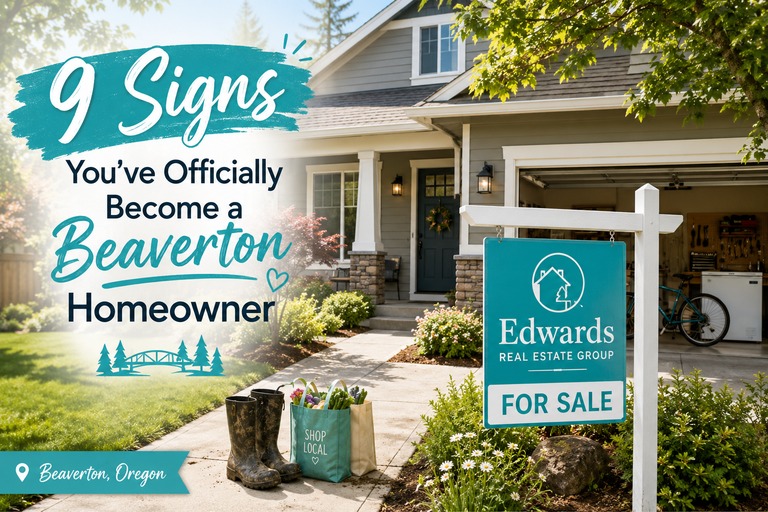
Nobody tells you exactly when it happens. You buy a house in Beaverton. You unpack. You learn which light switch operates absolutely nothing. You meet the neighbors.
Then one morning you wake up and realize: You've become a Beaverton homeowner.
There are signs. Subtle at first. Then unmistakable. If you check five or more boxes below, congratulations. There is probably moss growing somewhere on your property right now.
Before moving here: "Just take the highway."
After living here: "No, no, no. You don't take 217 at 4:45. Go down Hall, cut over—actually, wait, they're doing something at that intersection. Okay. Take Scholls. Unless it's Friday."
You now speak fluent Navigation.
Highway 217 has improved significantly, but longtime residents have institutional memory. Trust must be rebuilt slowly.
You didn't plan it. You just ended up there. Coffee in hand. Browsing something locally made. Considering vegetables.
This is what real estate professionals mean when they talk about "community amenities," although that phrase sounds far less exciting than, "We accidentally bought artisan hot sauce."
Oregonians have an interesting relationship with rain. We complain about it. We plan around it. We buy equipment for it. And then, inexplicably, we go outside in it.
A proper Beaverton garage may contain rain jackets, hiking boots, bicycles, camping equipment, umbrellas nobody uses, a leaf blower, a pressure washer, three bags of grass seed and a folding canopy purchased because somebody once scheduled a June barbecue.
This is why storage matters when buying real estate. That innocent-looking garage is not simply where the car goes. It is infrastructure.
Nothing ages a homeowner faster than water.
Renters hear rain and think, "Cozy." Homeowners hear rain and think, "When did I last clean the gutters?"
Suddenly you're outside staring at downspouts. You're evaluating slopes. You know what a French drain is. You have used the phrase, "Water always wins." And somewhere, a 23-year-old version of yourself is wondering what happened.
Welcome to homeownership.
This starts innocently. A house down the street lists for sale. You look it up. "$625,000?" Now you're interested.
Three days later you're tracking it. Two weeks later: "Pending!" Eventually: "IT SOLD FOR WHAT?"
Congratulations. You've become Neighborhood Real Estate Intelligence.
Your neighbor's sale doesn't automatically determine your home's value. Different condition, different lot, different square footage, different updates, different timing and occasionally different kitchen cabinets that somebody spent an amount of money on that nobody wants to discuss.
Buying a home changes your relationship with bulk purchasing.
Before: "Why would anyone need 36 rolls of paper towels?"
After: "We have a garage now."
This sentence has destroyed countless budgets.
Storage creates opportunity. Opportunity creates Costco. Costco creates a second refrigerator. The second refrigerator creates a need for electrical upgrades. Homeownership is a journey.
When people first shop for homes, they often focus primarily on the structure: bedrooms, bathrooms, square footage and kitchen.
But after living somewhere, you discover how much the surrounding area shapes your experience. Where you walk. Where you shop. How long errands take. Whether there's a park nearby. How you get to dinner. How easily friends visit.
The house matters. But so does everything around it.
Every homeowner has one. Maybe it's trim. Maybe it's a closet. Maybe it's the backsplash. Maybe there's a single outlet cover missing in the guest bedroom.
You know about it. Your spouse knows about it. Guests probably don't know about it. But you're convinced every person entering the room immediately thinks, "My goodness. They haven't finished that outlet."
They haven't noticed. Finish it anyway. You'll feel better.
This is one of the great American homeowner traditions. Usually spoken while standing in a kitchen. Sometimes while holding coffee. Often followed by a discussion about interest rates.
Real estate markets change. Values change. Rates change. Inventory changes. Buyer behavior changes.
That's why homeowners shouldn't base major decisions on headlines alone. A national housing story might have very little to do with your specific Beaverton neighborhood. Real estate is hyperlocal. Sometimes hyper-hyperlocal. Two streets can perform differently.
Everything.
Homes aren't investments that happen to contain people. They're places where life happens that also happen to be major investments. That's an important distinction.
People remember the first dinner in the new house, the backyard birthday party, the dog destroying the lawn, the kitchen remodel, the neighbor who helped move the sofa, the weekend walks and the first time they realized the furnace filter hadn't been changed in...quite some time.
Those experiences create attachment. And attachment is one reason selling a home can be surprisingly emotional.
When homeowners finally decide to move, they're rarely selling "1,982 square feet." They're selling the place where they lived.
That's why good representation requires both strategy and perspective. What will buyers value? What should be repaired? What should be left alone? How should the home be positioned? What's happening in the immediate market? How does the neighborhood compare? How will buyers discover the property?
Those are different questions. All of them matter.
When buyers have choices, pricing and presentation become increasingly important. A strong listing should stand out because it deserves to.
Great photography. Compelling presentation. Correct pricing. Easy showing access. Thoughtful marketing. Clear communication.
Not: "We put six cell-phone photos online and we're confused why nobody came."
Don't buy a house because everyone tells you real estate is a good investment. Buy because the finances make sense and the home supports the life you're building.
Walk the neighborhood. Test the commute. Visit on the weekend. Look beyond the staging. Open closets. Think about storage. Understand maintenance.
And ask yourself the most revealing homeownership question of all: "Where would we put the Costco stuff?"
If you immediately know the answer...you're ready for Beaverton.
Thinking about buying or selling in Beaverton?
Whether you’re curious about what your home is worth, wondering which neighborhood fits your lifestyle, or just have questions about the local market, we’re happy to help. 503-267-8701 or 503-888-8704

Joe EdwardsReal Estate is not just a career for me, it’s in my blood. In fact, my family was one of the largest home builder in the Portland Metro area from the 60’s through the 80’s....
After enough years in real estate, you begin noticing patterns. Every buyer is unique. But also...not entirely.Certain buyer personalities appear again and again. Beaverton, with its range of
Farmers Markets, Muddy Shoes, Garage Freezers and the Strange Real Estate Rituals Nobody Warns You AboutNobody tells you exactly when it happens. You buy a house in Beaverton. You unpack. You learn
Why Buyers Increasingly Care About What They Can Eat, Walk To and Do After They Get the KeysThere was a time when real estate marketing was simple: three bedrooms, two bathrooms, two-car garage,
Why Homebuyers Keep Looking West When They Want Portland Access Without Going Full PortlandEvery family has one: the responsible sibling.Portland is the sibling who went to art school, owns an
 All information provided is deemed reliable but is not guaranteed and should be independently verified. IDX information is provided exclusively for consumers' personal, non-commercial use, that it may not be used for any purpose other than to identify prospective properties consumers may be interested in purchasing, and that the data is deemed reliable but is not guaranteed accurate by RMLSTM.
The content relating to real estate for sale on this web site comes in part from the IDX program of the RMLSTM of Portland, Oregon. Real estate listings held by brokerage firms other than Lake Oswego are marked with the RMLSTM logo, and detailed information about these properties includes the names of the listing brokers. Listing content is copyright © 2026 RMLSTM, Portland, Oregon.
This content last updated on September 23, 2026 8:14 PM UTC at 4 AM. Some properties which appear for sale on this web site may subsequently have sold or may no longer be available.
All information provided is deemed reliable but is not guaranteed and should be independently verified. IDX information is provided exclusively for consumers' personal, non-commercial use, that it may not be used for any purpose other than to identify prospective properties consumers may be interested in purchasing, and that the data is deemed reliable but is not guaranteed accurate by RMLSTM.
The content relating to real estate for sale on this web site comes in part from the IDX program of the RMLSTM of Portland, Oregon. Real estate listings held by brokerage firms other than Lake Oswego are marked with the RMLSTM logo, and detailed information about these properties includes the names of the listing brokers. Listing content is copyright © 2026 RMLSTM, Portland, Oregon.
This content last updated on September 23, 2026 8:14 PM UTC at 4 AM. Some properties which appear for sale on this web site may subsequently have sold or may no longer be available.
